


Ask any long-haul driver who has crossed Malaba or Busia what slows a trip down, and roadblocks and border delays usually top the list, right alongside road conditions and inconsistent working hours between border posts. A recent government push to reform the Northern Corridor is aiming squarely at that problem, and if it succeeds, the ripple effects will reach every business that depends on cross-border trucking, Rwanda included.
The Scale of the Problem
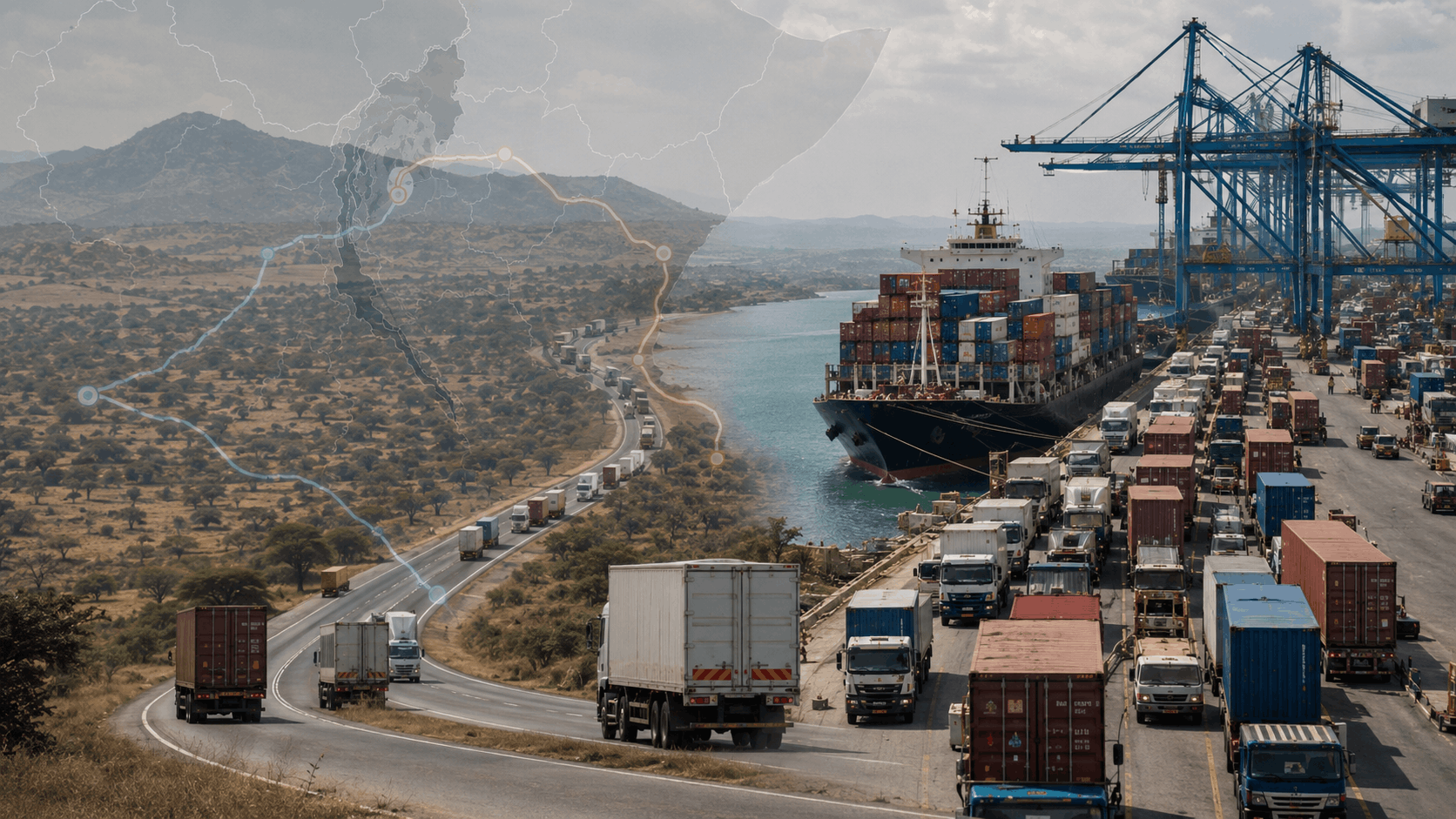
The Northern Corridor is not a minor route, it carries more than 35 million tonnes of cargo a year and accounts for the large majority of Kenya’s transit trade, serving Uganda, Rwanda, Burundi, South Sudan, and eastern DRC. But persistent inefficiencies : excessive roadblocks, inconsistent security response, and system outages at border crossings, have been pushing cargo toward alternative routes. Kenya has reportedly been losing between 5% and 8% of high-value transit cargo each year to competing options, largely the Central Corridor through Dar es Salaam.
What the Reforms Target
New measures under discussion aim to cut the number of roadblocks along the corridor to fewer than five and speed up security response times at key crossing points. Officials estimate that cutting transit delays by half could save transporters between $288 and $360 per trip, savings that compound quickly across a fleet running the corridor regularly, and add up to tens of millions of dollars a year at a regional level.
Why This Matters Beyond Kenya
It’s tempting to read this as a Kenyan trucking story, but the corridor doesn’t stop at the Kenyan border. Every efficiency gain, or continued delay on the Mombasa-to-Malaba stretch is felt just as directly in Kigali, where goods arrive later (or earlier) than planned, storage costs shift, and pricing conversations with clients get harder or easier depending on how predictable transit times are.
For businesses and transporters who rely on the Northern Corridor, this is a case where reform elsewhere in the region is worth watching closely rather than ignoring because “it’s not our border.”
Reform Momentum Doesn’t Replace Route Flexibility
Reforms like this take time to show up in day-to-day reliability: announcements are one thing, consistent results on the ground are another. In the meantime, transporters that maintain the flexibility to route through either the Northern or Central Corridor, depending on which is performing better in a given month, are best positioned to protect delivery commitments regardless of how quickly reform translates into practice.
The Takeaway
Corridor reform is a good-news story worth watching, for Rwandan importers and exporters, faster, more predictable transit through Kenya would mean lower costs and fewer disruptions passed down the chain. But until consistent results are visible over several months, the safest strategy remains the one that’s always worked in this region: work with transport partners who know both corridors well enough to choose the right one, trip by trip.

0 Comments