


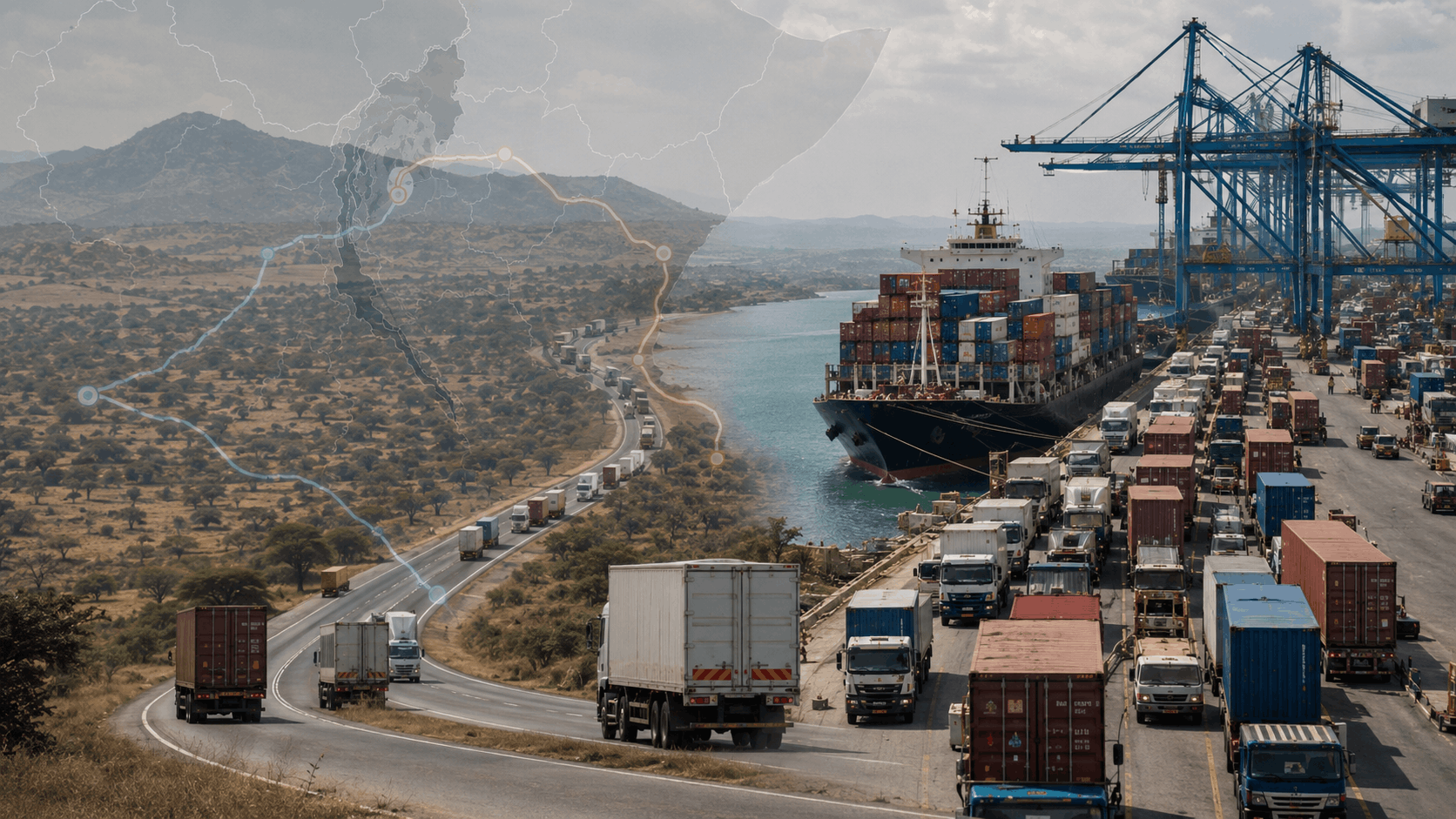
For most of the last decade, the question barely needed asking. If cargo was coming into Rwanda, it was coming through Dar es Salaam. Roughly seven out of every ten tonnes Rwanda imports or exports still move along the Central Corridor, and for years that dominance felt less like a choice than a fact of geography. That is changing in 2026, and not quietly. Rwanda has signed new government-to-government agreements with Kenya to route a growing share of its fuel imports through Mombasa, with the first direct shipment expected to dock between September 4 and 6. Tanzania, in turn, has responded by opening a liaison office in Kigali to speed up Central Corridor clearance and defend its market share. For the first time in years, Rwandan importers, oil marketers, and logistics planners have a real reason to ask which route actually serves them better.
The honest answer is: it depends what you’re moving, and increasingly, on what you’re moving it for.
The Central Corridor: shorter distance, deeper habit
The Central Corridor runs about 1,300 kilometers from the Port of Dar es Salaam to Kigali, making it the shorter of Rwanda’s two main routes to the sea. That distance advantage, combined with over a decade of established trading relationships, customs familiarity, and private-sector infrastructure, is why the corridor still carries the bulk of Rwanda’s general cargo, and why it’s likely to keep doing so. Rwanda’s own trade officials expect Dar es Salaam to remain the country’s principal gateway for consumer goods and manufacturing inputs even as fuel imports shift elsewhere.
Tanzania has also been investing in keeping it that way. A bilateral agreement signed in 2025 and now moving into implementation is decentralizing Dar es Salaam port services to a Kigali-based office, letting Rwandan traders clear and track shipments locally instead of traveling to Tanzania. Officials project this could cut Central Corridor clearance times by more than 80 percent compared with competing routes, backed by a port that is now over 90 percent digitized. For businesses moving dry cargo, agricultural exports, or anything that doesn’t depend on Kenya’s pipeline network, the Central Corridor is not losing relevance. If anything, it is getting faster.
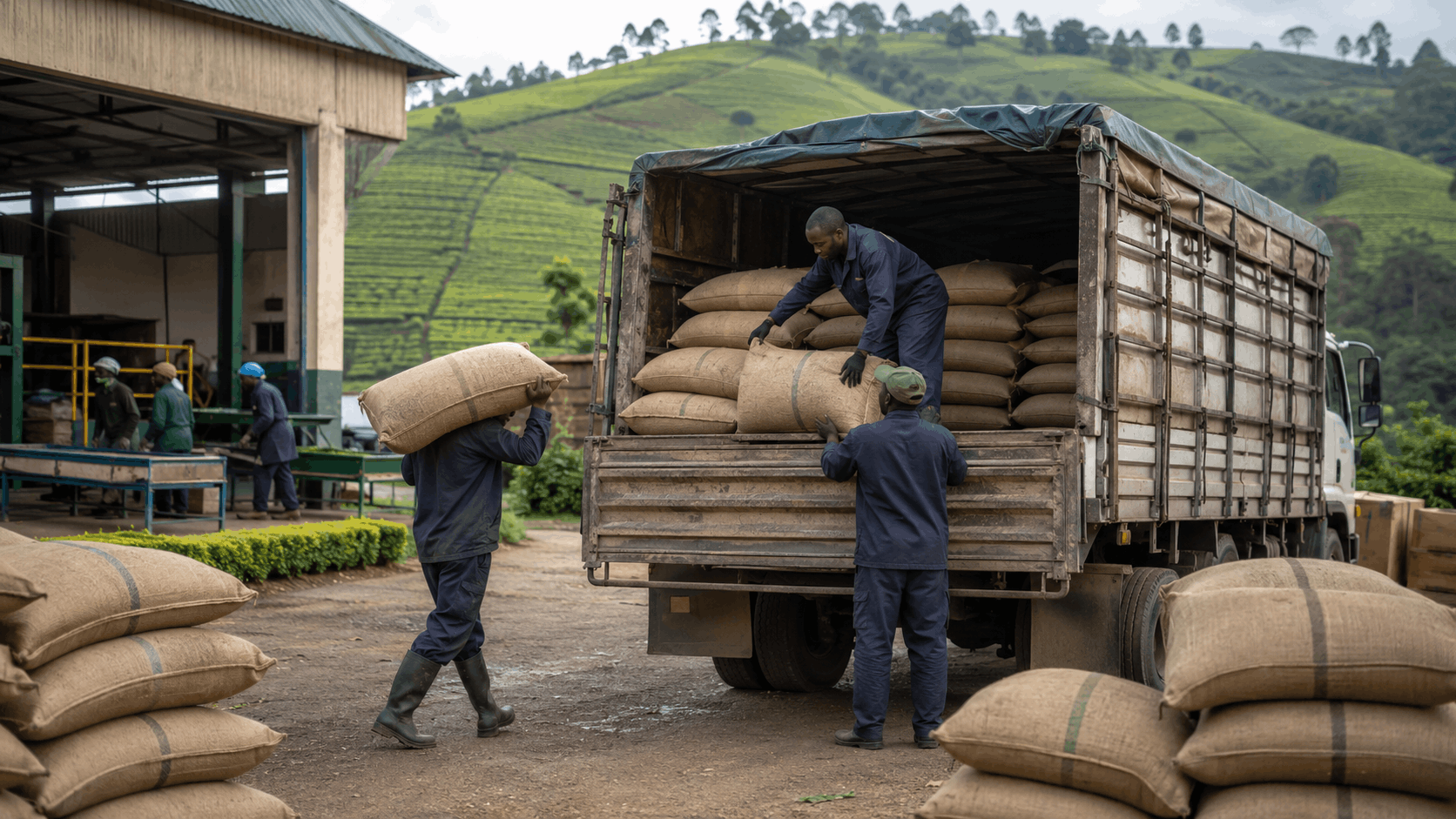
This is also the corridor Petrocom knows firsthand. Rwanda’s tea exports, for example, still rely heavily on the last-mile transport leg through Dar es Salaam to reach the Mombasa auction and onward global buyers, and general port congestion along either route continues to shape how East Africa’s trade routes are being reshaped more broadly.
The Northern Corridor: longer route, new leverage
The Northern Corridor stretches about 1,700 kilometers from Mombasa to Kigali, roughly 400 kilometers longer than the Central Corridor. On distance alone, it has never been the obvious choice for Rwanda. What’s changed is the economics around fuel specifically. Under new agreements signed in Nairobi in June 2026, Kenya extended the storage period for Rwandan fuel cargoes at Kenya Pipeline Company facilities from 35 days to as long as 90 days, a significant working-capital cushion for a landlocked country trying to build strategic reserves rather than run on thin, constant resupply.
The numbers involved are not small. Rwanda’s fuel imports through the Northern Corridor are projected to rise from roughly 42,000 cubic meters in 2025 to more than 500,000 cubic meters annually over time. Combined with a separate arrangement to import refined products through Tanzania’s Port of Tanga, officials estimate the two new channels could eventually exceed Rwanda’s total annual fuel consumption, which currently sits somewhere between 700 and 900 million litres a year. That is less about Mombasa suddenly becoming the cheaper or faster option and more about Rwanda deliberately building redundancy into a supply chain that has historically depended on a single corridor for nearly all its energy imports.
Petrocom has been tracking this shift as it unfolds, including what reformed border and transit procedures on the Northern Corridor could mean for cross-border trucking operators and the broader question of how fuel actually reaches Rwanda’s pumps once it clears the border.
So which corridor actually wins?
Neither, outright, and that is precisely the point of the 2026 shift. Rwanda is not choosing Mombasa over Dar es Salaam or the reverse; it is deliberately reducing how much any single route can dictate its supply security. For general cargo, manufacturing inputs, and agricultural exports like tea and coffee, the Central Corridor remains the shorter, more established, and increasingly faster-clearing option. For fuel specifically, the Northern Corridor’s extended storage terms and Kenya’s pipeline infrastructure now offer something Dar es Salaam alone couldn’t: genuine diversification against price shocks, strikes, congestion, or disruption on any one route.
For businesses and transporters, the practical takeaway is less about picking a side and more about routing intelligently by cargo type, and about working with a logistics partner who already understands the operational realities, customs procedures, and timing windows on both corridors rather than defaulting to whichever route has always been used. That kind of route-by-route judgment is exactly what we’ve written about when it comes to choosing the right logistics partner for your business, and it applies just as much to corridor selection as it does to choosing a carrier.
What this means for shippers in the months ahead
The first direct Mombasa shipment under the new framework is scheduled for early September 2026, and it will be worth watching closely, not because it will replace Dar es Salaam, but because it marks the first real test of whether Kenya’s extended storage terms and pipeline capacity can deliver on cost and reliability at scale. Meanwhile, Tanzania’s Kigali liaison office is moving into full implementation over the 2026/2027 financial year, which should make the Central Corridor faster just as it faces its first serious competition for fuel volumes in over a decade.
For Rwandan businesses, that competition is good news either way. A more diversified, more responsive corridor system means fewer single points of failure, and that matters for anyone whose supply chain has ever been at the mercy of a single port. Petrocom moves both petroleum and dry cargo across the region and works both corridors daily, which means route decisions are made on current conditions, not habit. If you’re planning cross-border cargo or fuel shipments in the coming months, get in touch with our team to talk through which route makes sense for your load.
Further reading: EAC road transport sub-sector overview, Ecofin Agency on Rwanda’s Mombasa fuel route agreement, KT Press on Rwanda’s new fuel corridor strategy.

0 Comments