

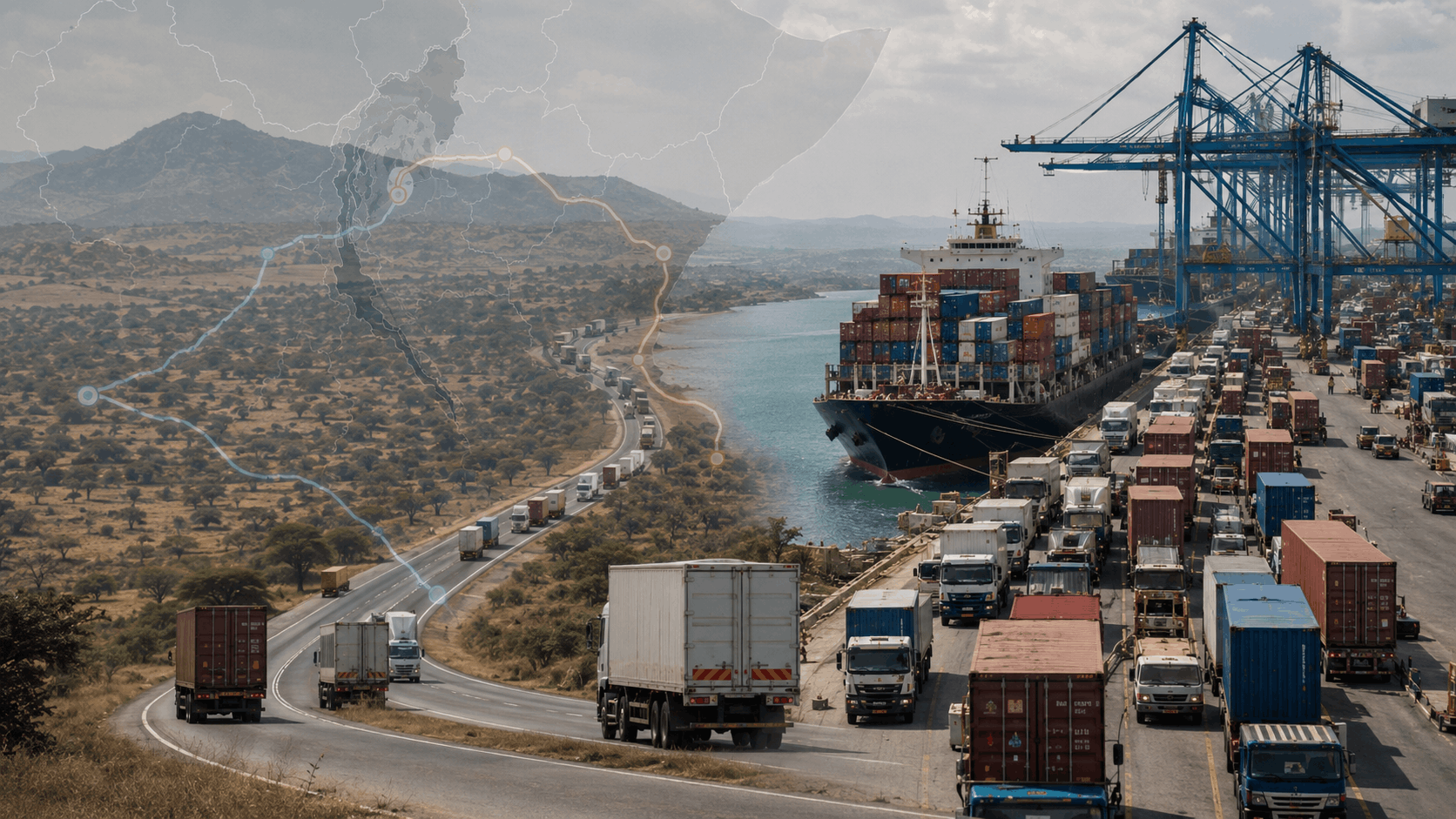
For years, the debate between Rwandan importers over which port to use, Mombasa in Kenya or Dar es Salaam in Tanzania, came down to distance and habit. That calculation is changing, and it’s changing because of what’s happening on the water, not just on the road.
A Congestion Problem That Isn’t Going Away
Since late 2025, the Port of Mombasa has faced what shipping analysts describe as a structural congestion problem rather than a temporary spike. Vessels have faced waiting incidences above 90% for extended periods, with some ships idling at anchorage for well over a week before berthing. Dar es Salaam, by contrast, has shown steadier improvement, cutting its own waiting times through operational changes rather than simply handling fewer ships.
The practical effect: landside transport fees on the more congested routes have risen sharply, and predictability, not just proximity, has become the deciding factor for many shippers deciding which corridor to use.
Two Corridors, One Region
Rwanda sits at the meeting point of two major transit routes:
- The Northern Corridor (about 1,700 km), running from the Port of Mombasa through Kenya and Uganda to Kigali.
- The Central Corridor (about 1,300 km), running from the Port of Dar es Salaam through Tanzania to Kigali.
Historically, Rwanda has already leaned heavily on the Central Corridor for transit cargo, a pattern reinforced by exactly the kind of reliability difference now showing up in the data. Even landlocked neighbours further afield, such as South Sudan, have begun formalising new agreements with Tanzanian ports specifically to route around Mombasa’s bottlenecks.
Reforms Are Underway: But Take Time
To be fair, this isn’t a story with only one side. Efforts are underway on the Kenyan side to address the Northern Corridor’s non-tariff barriers — including reducing roadblocks and speeding up security clearance at border posts like Malaba and Busia. Officials estimate that cutting transit delays in half could save transporters hundreds of dollars per trip. These are meaningful reforms, but they take time to translate into on-the-ground reliability.
What This Means for Businesses Moving Cargo Through Rwanda
- Route flexibility is now a real asset. Transport partners who can work confidently across both corridors, not just one, are better positioned to route around whichever bottleneck is active at a given time.
- Transit time volatility affects more than delivery dates. It affects insurance costs, storage needs, and how much buffer stock a business needs to carry.
- Data-driven routing decisions are replacing habit-based ones. Businesses and logistics partners that track real corridor performance, rather than assuming “the way we’ve always done it,” are the ones adapting fastest.
For any company importing cargo, whether petroleum products, machinery, or general goods into Rwanda, corridor choice is no longer a one-time decision made years ago. It’s an ongoing one, and the businesses paying attention to it are protecting their supply chains before problems show up at the pump or on the shelf.


0 Comments